Tag Archives: Digitalization

Digitized Contract Management

Automating the contract management process has long been part of an organization’s digital aspiration, however there seems to be a lack of clarity on what this really entails and delivers.

Go Digital caption image white on blue

Depending on who you talk to, you will get different views. The dilemma originates in the unconnected goals of the individuals utilizing the solution. Unfortunately there can be conflicting priorities that will influence the path that organizations take, and together with a lack a vision across the end-to-end contract management process, organizations miss significant service, cost, and risk improvement opportunities.

Typical Digital Journey Steps (1-2-3)

Step 1

Contract signing – use of digital signatures. This initial step will speed up the signing process and there are a number of electronic document signature platform solutions on the market. These solutions can handle both paper and electronic formats to support a transition from an existing manual to digital process which is useful when you are beginning your digital journey.

Importantly there needs to be clear policy guidance on what documents can be signed digitally. The more rule exceptions or exemptions to using digital signatures, the harder the organization will find it will be to achieve a 100% user adoption.

Step 2

Great, you have now have individuals invested in a paperless approval process however did you think about how this document signing process was fed in the first place.

Step 2 avoids the manual scan, upload, tagging and administrative pain that is created if the digital signature solution is not integrated directly with the contract management system. This means the contract management system becomes core to your digital approach.

TIP: Ensure that your digital signature and contract management solutions ‘talk to each other’ out of the box.

Again, there are numerous digital platforms out in the market – some with very rich features, however adoption success remains challenging. This is where the organizations needs to understand ‘what’ standard form drives customer and supplier contract generation.

TIP: Ensure your standard form documents cover 80%++ of your scenarios and relevantly reflect the products and services you are selling/ acquiring.

Respective end-customer and supplier contract creation and generation is essentially the same process, but complexities may differ due to different market positioning. For example, you may have to use the ‘other parties paper’ as the start point where that client or supplier organization has a greater balance of power rather than using your own standard terms & conditions. Assessing respective document volumes, complexity and $ value is key to unlocking an appropriate contract management process.

TIP: Establish a centralized ‘secure’ contract document repository with relevant templates, appropriate user support and role access

Keyboard T&C blue button

Authoring functionality may look cool, but it does not always make sense if you have standard preset terms & conditions, non-disclosure agreements, and/or other master documents. If we do need amend terms, we need to consider the negotiation process – how do we negotiate and conclude red-lines with the other party?

For many medium to large organizations, roles and responsibilities are segmented – Legal look after legal aspects, Procurement / Sales look after the commercial aspects etc. This means that contract management system needs to support the way the business operates its process flow i.e. the practice of ‘how’ the organization generates and concludes a document ready for signature?

TIP: Ensure your contract management system has the ability to be support internal and third party collaboration within the respective ecosystem partitions.

For example, do you need to establish a Purchase Order before signing the contract or the other way around? How is the contract document linked to the organization’s order management process. Is there 100% contract compliance across the organization?

Institute of Supply Management (2017) research suggests only 60%-80% of the organizations business transactions are governed by some sort of written agreement.

At the heart of contract digitalization are business policies. For example, ‘who’ within the organization is authorized to sign, ‘who’ has the final say on value versus risk, ‘what’ delegation of authority levels exist, ‘who’ has ownership of audit and compliance responsibilities etc. This must be understood to design and optimize the contract management process.

TIP: Who owns the contract, execution and management and is ‘on-point’ when the contract needs be leveraged. This is the value that must be qualified and quantified to support the determination of the ‘right’ process flow solution

Step 3

So we have dealt with the complexities and process ‘what’, ‘how’ and ‘who’ but has the organization connected the reasons for the contract ‘why’. Organizations need to consider the balance between value and risk. For example, organizations acting with zero risk appetite can make your business unattractive or closed for new partners/suppliers with onerous liabilities, insurance and or other terms. An unwieldy and lengthy contract management process benefits no one.

IACMM research suggest that 70% -75% of commercial issues lie at the heart of most troubled contracts (CPA Global 2016, “Excellence in Contract Management”)

Contract Lifecycle Management (CLM) steps beyond the contract management generation and signature process and deals with the delicate balance between:

i) Partner /Supplier performance, and

ii) Risk mitigation

Man balancing on tightrope

In the ‘digitalized’ world, we need to capture those performance attributes and risk factors in the ‘meta data’ to monitor and manage the contract. The challenge is that CLM requires cross-functional data inputs that originate from other platforms. This means that CLM is much more than a digitized agreement; it needs to be integrated more holistically to ensure that the end-to end dataset supports an operational process. The goal is to operationalize contracts to aid and drive value across the organization.

Good contract development and management can increase company profitability by 9% (World Commence & Contracting 2022, ‘ Poor contract management cost companies 9% – Bottom Line’)

To maximize impact, CLM must transition from a legal tool into an operational tool that allows organizations to optimize cost, quality and time. Establishing appropriate performance measures and smart reporting is critical to monitor and manage the value and risk balance.

“Instead of providing boxes to check to demonstrate compliance, output from frameworks should be a roadmap for improving business performance. It’s a way for companies to examine their current processes and pinpoint where they are going wrong via comparison to global best practices”

Ronald Lear, CMMI Institute Director of IP Development

TIP: Visual dashboards, such as the use of heat maps, are great at highlighting specific ‘focus opportunities’.

Ultimately contract breaches and remedy execution end up becoming legal issues, however good contract management intersects with good customer/supplier relationship management. Mitigation and prevention are preferable to cure. The true value of digitization is the power to manage a relationship actively rather relying on a passive document hiding in someone’s bottom draw.

TIP: Apply continual due diligence. Not only agree and check risk factors before you enter any agreement, but conduct regular ongoing reviews during the agreement term. A 360 view of the customer/ supplier relationship can be enhanced with specialist third party data covering where required: reputation, credit / finance , legal, security, environment, social and governance, supply chain inputs etc.

Conclusion (3-2-1 reversal)

If you know the journey potential, then arguably the contract management digitization process should not be owned by the legal function. The business needs to lead this based on a broader set of value and risk measures.
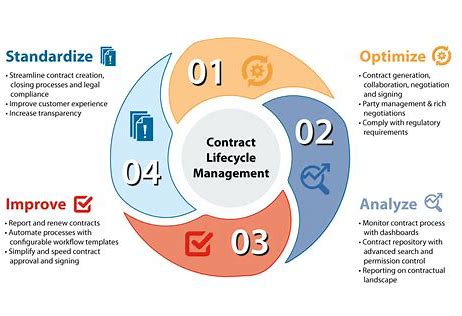
With and without digitalization, contract operationalization is extremely challenging – the organization can become ‘bogged down’ with data entry and information overload. This requires a robust vision on how to set-up an optimized process to connect individual goals.

Already have a digitized contract management roadmap. Whose goals have been prioritized? Contact Us.

Cook, Eat and Repeat

This week’s inspiration is taken from Nigella Lawson’s BBC ‘cook, eat and repeat’ recipes, and having now survived the doldrums of the first month, attention is now truly focused on the opportunities ahead.

With the new year comes new resolutions, new budget and a sense of positive energy, digital tech firms are searching for better ways to inspire procurement professionals can leverage technology and avoid failure. One way to remove the fear is to ensure that someone else has tried it before, and discovered what works and what does not.

Unfortunately what makes sense and tastes terrific differs per individual. This distortion means that there is a reluctance to document the recipe. Why? Cook books have a range of recipes, not all may appeal, but they are here to help. Try one, if that does not succeed, try another, Once you have discovered a recipe that works, share the recipe with others. Success is repetitive.

Where to Start

Where do you find that elusive cook book? Find an experienced cook who has developed their own independent cook book, or at least able to access a library; that is well-versed across range of recipes, and capable of assessing what is likely to be attuned to the organization’s taste. Find and establish the recipe that works – it needs a mix and balance to perfect the outcome.

In simple terms, technology implementations follow the same ‘cook, eat and repeat‘ philosophy. Importantly……

Follow the instructions

  1. Use the prescribed ingredients (apple pie without the apple is not apple pie)
  2. Utilize the best ingredients you can afford (leadership, talent, team)
  3. Understand the cooking time (if someone wants a well-done steak but cooks it for 30 seconds, it will not be well-done)
  4. Assess success by arranging tasting sessions (“feedback is the breakfast for champions”)
  5. Sell the fact that you have found a tasty recipe. Others will be keen to have a try!

You might find this cooking analogy too simplistic, however given the successful introduction and adoption of digital technology remains a major challenge, what will you do to explain the process?

Ready, Steady, Cook! The best time to find your success recipe is to start now. Contact Us.

Digital [Invention] Drivers

‘Necessity is the mother of invention’. Practicality is a driver of necessity. The earliest concept of the modern day monetary system, metal coins, can be traced back to 600 BC, the Lydian Empire. Coins reigned supreme until the 11th century when the Song dynasty invented paper money ….. paper revolutionized the way that people could carry around their wealth without weighing them down! Ease and convenience are powerful USP’s (unique selling points).

Digitization, 1 and 0’s, paperless money is now starting to dominate our daily lives. The proportion of cashless transactions increases every year with over 70% of Asian and European payment transactions now going paperless. Whilst there may be cultural acceptance differences across the countries, the ease and convenience of ‘tapping’ your card or phone is now a digital cultural norm.

Foundational to the digitization enablement is the change in underlying process and platforms needed to support each ‘revolution‘ step. This is complex and often requires a mindset change. Under the digital transformation ‘call to action’, we refer to this as ‘digitalization’, or the ‘digitalization journey’. Digitalization involves the adaption and re-engineering of processes to balance user outcome benefits with business policies and procedures to ensure secure, consistent and robust controls. User adoption is improved by making the process easy and convenient.

What is the next tech wave?

The news is awash with the recent Microsoft investment in ChatGPT. Personally I believe we are still in that hype phase; and have yet to fully realize the benefit potential of using a ‘super charged’ chatbot to make the process easier and more convenient for the user. I articulate the challenges of AI in my last article, “The Age of AI: What’s Procurement’s fate?“.

As we close out 2022 and fast-forward 2023, my ongoing outlook is that we remain constrained by the complexity of the process being addressed and whether the user themselves are able to accept a new operational/ cultural narrative. The art of ‘digitalization’ remains, as ever, critical to success.

Confused by the digital tech talk. Share you perspective.

The importance of Digital Culture

The relationship between humans and technology continues to advance rapidly. For many us, interacting with Siri or Alexa is now second nature, however assuming that individuals will automatically understand and adopt technology is not a given. These developments are creating another set of challenges (and opportunities) for the organization.

Digital culture describes how technology shapes the way we think, interact, behave and communicate, and as technology revolutionizes, there is invariably an impact corporate culture. Being digital savvy is more than just being paperless, it is about being attuned to the opportunities presented to the organization – all of which need considered management.

For example. remote working technology implementation delivered efficiencies, speeding up work and empowering the workforce. The COVID pandemic accelerated the deployment of these remote working technologies and demonstrated that users could be both productive and effective working from home. Post pandemic, having now grown used to these technology benefits, it is not surprising that a large number of users are resisting the call to the return of a 5 day per week office working. It will be interesting to see how the recent Twitter employee backlash unfolds on the scrapping of the working from home policy.

As these technologies become more embedded, building on the previous theme, hybrid (home and office) working becomes a digital cultural norm, and therefore likely to be a standard employment practice to attract new employees into an organization. Organizations that foster and embrace an environment where users can explore, experiment, develop, and benefit from technology innovation lead to a more motivated workforce.

Putting People first in Digital Transformation” Survey 2021: 66% are optimistic about the opportunities that technology can bring to their career and work.

Ricoh

Further advancements in cognitive technologies that mimic the human brain: perceiving, judging, thinking and reasoning will continue to challenge the digital culture. There is a whole new profession in the making.

Bottom line: It’s not about the technology, it’s about the way people will use the technology. This should be a key assessment when designing and planning your digital transformation.

To bring home the point, here’s a link to footage of two teenagers completely baffled on how to use a rotary phone. It is easy to forget how rapidly culture evolves!! How are you managing change?

From

Rotary analogue phone

To

Does your digital eXPerience have P for People? Contact Us.

Painting by (Part) Numbers

There are some amazing painting by number kits available in the market today. Interestingly the concept was first introduced in the 16th century by Michelangleo to assign sections of his ceiling masterpieces to students to paint; pre-numbering each section to avoid mistakes. In isolation these sections seem not to make sense, but as a come together, they complete the whole picture beautifully.

Within manufacturing, the use of part numbers and bill of materials deliver a similar outcome to ensure consistency and repeatability. Services use procedures and checklists to ensure compliance. And for all the above, the goal is to standardize, manage and quality control outputs, as well as leveling-up productivity.

Heads Up: My Digital Opinion

Maintaining data quality is one of the biggest challenges within organizations, particularly rapidly growing organizations. This observation is not a commonly shared view, yet digitalization is often positioned as a silver bullet in magically solving organizations quality challenges. This over simplifies the underlying effort and work needed to define, structure and cleanse data that organizations can confidently trust.

For example, much of our Spend Analytics data accuracy relies on individuals entering and creating purchase requisitions correctly. If these inputs are free text, mainly descriptive, and open ended, inputs will absolutely vary dependent on the individual entering the dataset, and despite normalization (either via initial data screening, scrubbing or future use of RPA and AI applications); they will not be considered reliable enough to trust without further manual touch and investigation. If it is not 100% at the get-go, we need to check!

Where items can be procured via catalog and/or using a part list, these part number codifications deliver the confidence that the purchase is what it says it is, and supports an apple to apple analysis and baseline. Unfortunately not all businesses are that clear cut.

The question is how can we structure inputs, particularly in the acquisition of services, to improve the output. User training itself is not the solution. There are strategies that require collaboration with Finance (Chart of Accounts), Operations (Maintenance Schedules), Construction (Bill of Quantity), Accounts Payable (Invoices) etc. that redefine and reshape data entry to create more end to end codification, using guided assistance and part numbers (and variations thereof) to deliver a win/win. As with painting by numbers, in isolation, this may not make sense to those that are involved in a process subset, however if you trying to paint without numbers (and digitally operate) you are likely to struggle in delivering the picture you envisaged (artist skills aside!!).

Prepare, build and accelerate the journey to complete the picture. Contact Us.

Costing (‘the avoidance of’) Digital Failure

How do we qualify the cost of failure and reflect this in the business case to underscore the need to invest adequately? There is well documented research on the low success rate of digitalization initiatives, poor adoption and delayed deployments, but little on the actual $’s involved.

In order to better understand the cost dynamics, imagine an iceberg. The visible tip is the smallest part of the iceberg. This is analogous to the cost of software. The largest part is below the water line, often hidden, and is analogous to the cost of the professional services to implement and execute a digital platform. It is not uncommon for the software: professional services cost profile mix to be around 1:9.

iceberg above and below sea

Software 10%

Professional Services 90%

To clarify, digital platforms require end-to-end integration – they are not standalone apps. Given this cost imbalance, getting to grips with the professional services element is critical.

Professional Services costs are determined by skill set rate card multiplied by days effort. For large and complex projects, forecasting skills and effort can be challenging. Taking a leaf from the manufacturing industry, lean and six-sigma practices, I am reminded that:

“Cost is more important than quality, but quality is the best way to reduce cost”

Genichi Taguchi

How do we increase the probability of success? My article ‘Improving Your Digital Transformation Success Rate‘ outlines key factors that an organization needs to address to improve success rates. The downside is the investment required as business cases can be challenging at the best of times.

How do we get value for money? Organizations need assurance that costs will be fixed and controlled. There is a temptation to cut corners and if the true cost of the professional services element is hidden; the business case becomes software centric and likely to become another failure statistic. A better way is to qualify the costs of failure when assessing the scope and level of professional services. What if we need to rework, increase the volume of change requests, write-off work, delay the project, perform more tests, suffer from low adoption etc. ? How would that impact the business case? This cost avoidance argument can be used to balance and justify a broader understanding of a more comprehensive business case.

How do we mitigate and reduce the cost of failure? Allocate the best talent to the initiative, and perform in depth due diligence on any external professional services provider to ensure you get the best quality professional services. Low price, administrative, unskilled resources will have a negative exponential impact and increase the cost of failure (adding to the below the water line iceberg).

Organizations that fail fast, learn fast have inherent capability to adapt and course correct as they ride the wave and are typically those already operating best in class with a high level of maturity. For the remaining majority, digitalization can be complex and daunting. We learn from our mistakes, but sometimes we need it ‘right first time‘. Otherwise, failure becomes extremely expensive.

Need Help. Contact Us.

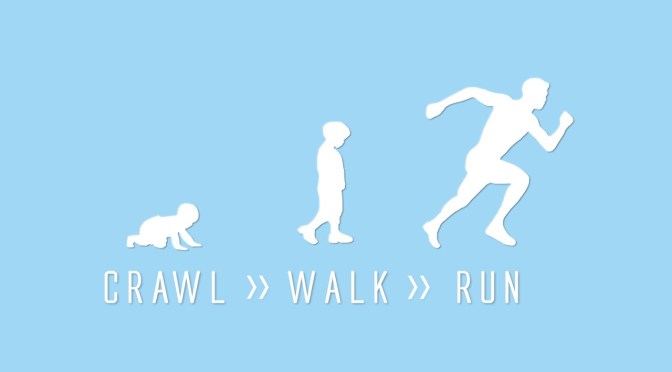
Crawl before your Walk, Walk before you Run, it’s a Digital Journey

Digitalization projects are difficult. It’s not about the technology. Yes technology plays a part but it is understanding how the potential technology can be applied and developed to shape the user experience, aka customer journey.

There is a temptation to jump in without any directional oversight which frames the anticipated customer journey. These plans, or roadmaps, are more than a project timetable; they consider how the user interacts with the technology as well as the required functionality. This forms the minimum viable product (MVP) – both aspects must be addressed. A common failing is to get lost in the technology, and ignore the user.

A better way? Perhaps?

A personal frustration is the lack of data points assessment. Cutting through and making sense of the various data points is key in producing a storyboard that delivers both efficiency and effectiveness. Who get’s data, what do they do with it, how is the decision reached, what is the data output are some of the questions that need to be asked and addressed. Understanding the customer journey involves a more holistic appreciation of the end to end process.

Similarly when the business fails to assess data quality, data remains ‘dirty’ and unstructured. It seems crazy that organizations believe that they can ignore these factors and succeed. For example, imagine a zero-touch accounts payable invoice goal where the supplier master data is just garbage and missing bank accounts.

Embedding this into the roadmap ensures alignment on a facts and data basis. Where there is mismatch on MVP, change the phasing or delay the project.

Quick win?

In some cases preparing solid foundations for digitization can take years. A good example was the ebook value chain: obtaining rights from authors and agents and setting up the electronic distribution business model were critical to enable the introduction of the ebook. This was not a quick win.

There is no clean start or stop: goal posts move, organizations grow and evolve, new functionality becomes available, customer demands alter – there is constant change. This is the digitalization journey.

There may be options for quick wins; depending on the context. In the main these will be determined by the quality of the digital foundations and how quickly they can be re-validated. These broader factors can become barriers if you fail to address.

Technology is an enabler. Central to the digital journey is the customer experience. These factors influence your critical path. Line up the planning sequences and eat that elephant in the room, one bite at a time!

Are you still crawling? Contact Us.


Addressing low Digital adoption – Top Tips

If you are still using a manual arrangement for raising and issuing orders, you have fallen behind. For those organizations already out of the starting blocks; experiencing delays in adoption and or experiencing compromised implementations that fail to deliver the value expected, the clock is still ticking…….

Runners lined up on starting blocks

The prevailing assumption is that digitization improves efficiency. Removing paper from the process is good; automating workflow approvals is good; using catalogs to help your organization buy off contract is good; yet for these examples and others, organizations face low adoption. Why is this?

The gap between vision and execution. They say ‘bad workmen blame their tools’ and unfortunately if the solution is not delivering against expectations, the technology is blamed. The gap between the vision and execution is a failing that challenges many projects.

One shoe size does not fit all – however the end-to-end process steps to assemble shoes is the same. Organizations unable to segment different use cases and apply appropriate and relevant processes within the platform will face user resistance. These failings will have users complaining that the new solution and process is more complex and less efficient than the previous manual arrangement. It is no surprise then adoption remains low!

Critical to success is the ability to assess, match and configure a process to a process flow sustained effectively within the applicable technology platform. Configuration does not mean customization. The art of digitalization is delivering a more effective outcome for the user and business by balancing and re-engineering processes to leverage standard platform functionality configured to meet your business needs. There is more than one right answer, but typically one answer makes the most sense.

This art requires an agile mindset – particularly, where there is a need to integrate across different technology platforms. There may be trade offs when considering functionality overlaps – which platform remains the source of truth and core to the process – this requires a solid understanding of the end-to-end process and how similar use cases can be consolidated and optimized. The goal is ensure a seamless flow from A to B, to C, to D that is both efficient and effective.

Top Tips

  • Understand the landscape holistically to define the strategy
  • Understand the technology suite
  • Engage users early on to understand use cases (capture the As-Is baseline and pain points)
  • Align the best talent and user champions to design the new To-Be processes
  • Challenge current comfort zones to avoid repeating the existing process
  • Keep userability front of mind – keep it simple and intuitive
  • Lead, communicate and train extensively

The digital journey is not an easy one. Value the transaction and act accordingly.

Are you in Digital Hell or Heaven? Bridge the gap between Vision and Execution. Contact Us.


Mirror, mirror on the wall is my Digital Twin worth it all!

With no apologies for the word play, yet another digitalization opportunity is emerging to further aid our ability to simulate the real world virtually and help organizations and individuals make ‘better’ decisions.

What is a Digital Twin? A digital twin is a virtual representation, a model, of any physical asset, process, system or environment that is created to look and behave like its counterpart in the real world. These models use data inputs to mimic real world conditions and help design, development, operation, prediction and scenario testing.This arrangement is more cost effective than real world simulations, however the data modelling concept is not new as engineers have been using computational modeling since the 1960’s.

What’s Changed? The ability to leverage computational modelling has been accelerated by significant performance and cost improvements in data processing power, device and sensor technology. The move to constantly stream real-time data into a model makes the digital twin more dynamic.

Further twinning the digital twin with data and process mining – additionally boosted through the application of AI and machine learning – is another evolution that is gaining traction (PWC,”Twinning the digital twin with process mining: the right recipe for a truly connected supply chain”). This set-up can be an extremely valuable tool to help organizations generate insights on process gaps, bottlenecks and inefficiencies, and then simulate alternative scenarios.

The Crunch? Garbage in equals garbage out. Outside the cost of software, sensor /device hardware and IoT cloud capacity and connectivity, a significant amount of people time and effort is required to build and translate the digital twin into a meaningful model. The challenge for many organizations are the skills needed to comprehensively identify, structure, and map data in the context of the applicable process flow. Over simplification results in an inaccurate model, and over complexity typically confuses.

Forming a digital twin is therefore likely to more attractive for specific industries, for example, construction and manufacturing, where there is a more direct line of sight into the computational model from the start. For those organizations without a clear line of sight, the use case and digital twin ROI benefit may feel overwhelming. Accuracy is determined by a large quantity of good high quality data and where datasets contain critical errors, and/or miss key attributes; this can confuse baselines. This complication may discourage organizations from understanding the value of creating a digital twin.

Open up your opportunity and explore how to achieve a digital win with the twin. Contact Us.


Improving your Digital Transformation success rate

According to BCG, the success rate for Digital Transformation is less than 30%, however they identified 6 key success factors that can reverse the odds to 80% (BCG, 2020, Flipping the Odds of Digital Transformation Success). The study indicated crucially that all the 6 key success factors had to be addressed. Where only some of the factors were addressed in part or full; partial effort still led to failure.

Digital Transformation image

The success factors they identified were:

  1. Presence of an integrated strategy with clear Digital Transformation goals
    • A clear plan on the why, what and how supported with quantified and measurable benefits
  2. Commitment from senior leadership team.
    • Clear top down sponsorship
    • High engagement and alignment
  3. Use of High Quality talent
    • Allocation of the most capable team resources to support the program
  4. Having an ‘agile’ mindset to govern the program and to accelerate adoption
    • Tackle roadblocks quickly, adapt to the changing contexts, and don’t delay in the pursuit of perfection
    • Awareness of shortcomings and creation of an action plan as you progress
    • Mastery of continual innovation and improvement
  5. Effective progress monitoring
    • Establishment of clear success metrics with sufficient data availability and quality
    • Maintaining eyes on the broader goals
  6. Business led [this is not an IT led project]
    • Business needs driven
    • Integrated modular technology platform that can seamlessly scale across the ecosystems.

More concerning is that a more recent Gartner survey indicated that only 22% of procurement leaders have a long-term Digital Strategy (Gartner, 2022, Procurement Digital Strategy). The reasons for this were not captured but the implication for those procurement leaders and laggards unable to develop a strategy and convince the leadership to invest does not bode well.

Of all the success factor combinations, only where all 6 are present, will an organization sustain digital transformation success. The conclusion is that adequate preparation, planning and execution time and $ investment is required. No revolutionary insight, yet not easy!

Need help to form a strategy and increase your success rate. Contact Us.