Tag Archives: AI

New Mindset – 2025 Adventure

After a period of recent introspection where actual AI procurement project progress versus hype expectation continues to be a challenge, there has been a forced rethink of the mindset required to maintain a steady course.

Many of us, myself included, prefer a structured approach akin to ‘a journey’. We are driven by a vision, an end-destination, with a plan including appropriate stop off points to recheck and validate whether we are on-track, with periodic course corrections to ensure that we feed-in new data, as applicable, to adjust the approach.

In today’s environment, it seems that organizations are failing to maintain a steady course. Fueled by a high level of business uncertainty, the experience is extremely unsettling and demotivating.

Progress can be a positive experience if managed well, however the disconnect is exacerbated if there is a lack of credible use case, questionable and inconsistent leadership and inability to translate the vision into execution. Accordingly to Rand research (The Root Causes of failure for Artificial Intelligence Projects and how they can succeed, Aug 2024) 80% of AI investments are destined to fail; twice the rate of failure of IT projects that do not involve AI.

Having attended a recent AI in procurement ‘thought leadership’ session, it leads me to conclude our industry pundits have little actual evidenced tangible outcomes. Typical statements such as the below send a mixed message:

  • We think …. improved automation
  • We believe …. new solutions we cannot imagine
  • We estimate …… improved data analytics
  • We forecast ….. a change ?!

My main concern is that there are few actual use cases that have been successful. Either most remain as work in progress or if successfully completed, business’s are keeping them under wraps. The conclusion, whether we go ‘left’ or go ‘right’, is to adopt a different mindset and instead consider the journey as an adventure. Just do not believe it’s a done deal!

Disagree. Collaborate and share your AI use case success. Otherwise enjoy the ride and have fun!

Spring Forward, Fall Back

The changing dynamics of world events reinforce the uncertainty of life, and no matter how much technology advances, human behaviour remains unpredictable.

The concept of smart supply chains underscores the need for agility and resilience:


The threat on current supply chains requires procurement leaders to be more aware of the potential impact to their organization. There are a number of AI based tool sets that are available in the market [a useful ProcureTech link is included to help independent research].

A common business criticism is that the procurement process already takes too long and any increased complexity and additional risk management demands will place further strain on the process.

There is still considerable fear around the use AI. Recent business feedback highlight concerns with data security and a further need to perform greater process due diligence. The challenge is closed minds and extended time delays create barriers that do not help the organization to respond to potential supply chain disruptions.

Forrester’s research suggests as many as 86% of US employees fear that many people will lose their jobs to AI and automation, and almost a third (31%) believe that trend will manifest during the next two to five years.

It is understandable that many organizations hesitate to make the leap. What’s the alternative?

The best strategy is to develop a strong business culture. There is a high correlation between culture and performance. McKinsey studies across 1000+ organizations suggests a special ‘something’ enables competitive advantage to grow and sustain over time. That something is culture.

Why is culture so important to a business? Here is a simple way to frame it. The stronger the culture, the less corporate process a company needs. When the culture is strong, you can trust everyone to do the right thing.”

Brian Chesky, Co-founder and CEO, Airbnb

Despite the fears and the uncertainty, I was encouraged following a discussion with a junior colleague, who confidentially echoed the Forrester finding that Gen AI will reshape far more jobs than it eliminates. “Only those [individuals] would fail to use AI will lose their jobs”. Generation-z have no issue in leveraging technology; after all they have grown up in the digital world.


It is not about ‘having’ time, it is about making time

Oh no, now we have Intelligent Automation (IA)

To add to the already long list of existing and confusing digital technology acronyms; we have Intelligent Automation (IA). IA uses AI but builds on automation technologies such as Robot Process Automation (RPA). The diagram below illustrates the intersection perfectly.

Our previous articles have highlighted that AI is not yet widely adopted by many organizations and remains largely at the proof of concept stage.

A recent report from Hackett Group [2024 Procurement Agenda and Key Issues Study] underscores the progress of digital automation adoption and better illustrates the relative adoption success between RPA and AI. According to Hackett, RPA is adopted, or in the process of adoption, by 51% Procurement functions studied compared to 28% for AI.

RPA is not AI

RPA uses rule based scripting to integrate and perform repetitive tasks. It follows a process defined by the end user, however RPA can utilize AI agents. These AI agents can recognize patterns in data, in particular unstructured data, learning over time.

Value Proposition Expectation

The Hackett study differentiates between solution suites, such as ERP, and point technology solutions. Gen AI, RPA and ChatBots are all point solutions. The low level of large scale deployments of Gen AI (5%), RPA (19%) and Chatbots (6%) suggests a need to join up the ‘points’ and develop more suite solutions for procurement organizations to leverage.

Looking into the crystal ball and beyond the current AI hype, the combination of technologies would suggest that IA, which incorporates sub-disciplines of AI, like ML and Natural Language processing (NPL), is the logical and practical ‘suite solution’ outcome which we predict to be the digital automation toolset that provides real executable value for procurement.

IA could be that sweet spot that realizes the true potential of AI to deliver business value.

IA or AI : What is your success prediction?

Technology fatigue? Changing Procurement’s Perspective

As we collectively look forward to our summer time break, the opportunity to recharge the batteries and step back is a welcome rest. User fatigue is common challenge in technology evolution; user dissatisfaction, lack of trust in technology, frustration and lost interest reduces the level of user engagement and motivation in technology adoption.

Within Procurement, there are myriad of AI use cases that offer potential but currently lack tangible and demonstrable output.

Risk Aversion

AI is hampered by bad data but the lack of trust in the technology blinds decision makers in endorsing ‘finding a better way’. This vicious cycle creates a detrimental effect, or even the perception of high risk.

Organizations that are risk averse have a higher level of user fatigue (The Institute Risk Management Risk Appetite & Tolerance Guidance Paper, Sept 2011) . The balance between ‘reward’ and ‘risk’ must be explored and purposefully agreed by the business.

Gartner Research Feb 2024, ‘Embed Total Cost of Ownership (TCO) in Procurement Teams to Optimize Value’, recommends TCO principles to improve business performance success. This perspective requires a new set of value measures, triangulating additional datasets housed across various internal and external systems. Procurement organizations must prioritize data integrity to minimize user fatigue. Note: You can have the best AI technology, but if there is no trust or use case benefit, adoption and ROI remains zero.

Data integrity considers not only the accuracy and consistency, but the ways data is interconnected across disparate systems to create ‘single sources of truth’ with high quality data.

Addressing the risk that AI itself impacts the organization’s data quality is another concern. According to McKinsey, “some 71 percent of senior IT leaders believe generative AI technology is introducing new security risk to their data.”

90% see improving compliance and risk as important for driving their data-driven decision intelligence investments ​​​
Source: ProcureTech research

Increasing Complexity Trend

Accordingly to Gartner, increasing supply chain cost and complexity, as well as economic and geopolitical instability, are significantly impacting business margins and supply continuity. Inevitability this means that organizations will require more TCO data points to manage the evolving supply chain scope.

Structuring unstructured data will make it a business asset.

Back to Basics

Seemingly the procurement road to success is not only to change the perspective, but to take advantage of technology, they must revisit their risk and reward balance. Understanding how to deliver improved data integrity within the supply chain will support the journey of winning ‘hearts and minds’.

AI is intended to simulate human intelligence and the ability to acquire and apply knowledge in an application that users trust and adopt will be a critical success factor.

Execution is Everything. AI is coming home. Share your Perspective.

Transformation AI Blues

Despite the wave of use cases and significant investment in Gen AI, current success rates remain low.

Back in 2021 Gartner reported that 85% of AI projects fail to deliver, and only 53% of projects made it from prototype to production. A more recent study by Infosys Study Dec 2023 indicates that only 6% of European Gen AI use cases have created value.

The hype around AI has led to a explosion of exploration activities across many organizations. In one example, in the rush to join the bandwagon, a bank bought tens of thousands of GitHub Copilot licenses without a clear sense of how to apply the technology. As a result most of those projects will fail to generate competitive advantage.

7 out of 10 digital transformation initiatives are considered failures using value measures such as user adoption and overall ROI profitability metrics. There are many parallels between AI and digital transformation project causes of failure. Spending big money on AI does not guarantee transformational results — its implementation execution that realizes the value.

Data

Part of the failure can be attributed to bad data: too little, poor quality, not in the right place, in the wrong format, missing key data points and often unintelligible across disparate systems. It’s insufficiency limits the the transformation and without a plan to transform the data in a way that creates value, AI initiatives struggle to tame the beast.

AI Magazine March 2022

Often organizations complete a one-off data cleanse to initiate the digital transformation, however this is short-lived given the unaddressed constant generation of bad data. A deliberate focus is required to build better quality data from the start, linked across organizational systems, to create a ‘single source of truth’. AI use cases operating without these data build considerations never achieve ‘lift-off’ .

Oliver Wyman 400 C-level executives in Europe and the Americas survey suggests that Data privacy (25%) and security concerns (22%) are the top factors preventing AI adoption.

Success Strategies

Accordingly to the Gartner AI Hype Cycle, we have now reached the peak of inflated expectations, and during 2024 will be moving into the trough of disillusionment. The big question is how to begin creating measurable value.

Gartner Predictions


By 2025, growth in 90% of enterprise deployments of GenAI will slow as costs exceed value.

World Economic Forum Agenda May 2024 Implementation Recommendations

  1. Pick the right composition of leaders for the AI transformation
  2. Embrace complexity and novel approaches
  3. Incorporate design principles in human-to- machine interactions.
  4. Bring workers along on the AI transformation with upskilling
  5. Score quick wins via efficiency gains.

My thoughts echo these recommendations. Transformational AI is a cross-functional effort, however many organizational departments operate in silo’s and there is a need to appoint senior business managers with sufficient granular view across the organization to help articulate and determine the journey steps. Organizations tend to delegate to IT as a default which is a mistake given the business success measures.

As with any digital transformation, human-centric design principles are essential to ensure that the AI output is structured and formatted in a way that is clearly understood by the human, for human decision validation.

By 2028, more than 50% of enterprises that have built large AI models from scratch will abandon their efforts due to costs, complexity and technical debt in their deployments.


If you don’t measure it, you don’t get it


KPI’s are critical in objectively measuring value and assessing AI success:

# Business Goal alignment

# Delivering data-driven insights

# User adoption

# Performance

# ROI

Paradigm Shift

GenAI is not just a tool; it’s a paradigm shift.

In conclusion, AI deployment complexities mirror the same challenges associated with organizational digital transformation initiatives. Transformational AI disillusionment will start with the realization that a strong business case, energy and resilience are required to stay the journey. There are no short cuts.

Should we be more cautious or is the risk worth the reward?

AI is a Journey, not a Destination

My journey with AI is progressing and as a great believer in active learning, I have been getting ‘hands on’ and ‘into the weeds’. I hope sharing and reflecting lessons learnt spreads the knowledge (and addresses the execution challenges that the technology pundits gloss over).

AI is not the silver bullet; the reality requires significant design purpose involving ‘sweat and toil’ to realize value. Rocking up to pitch AI without a solid use case or business proposition is like throwing mud on the wall and hoping some of it sticks.

The conclusion: there are no short cuts.

The Learning Journey – Execution Lessons

1. Quality of the prompt and question being asked is critical to elicit a complete and relevant response. A poor question leads to a poor and less relevant and ambiguous response. There is a excellent post from Anakin.ai blog [Mastering ChatGPT: How to Ask the Best Questions] which frames how to get the best out of ChatGPT:

  • Be Clear and Specific
  • Contextualize the Question
  • Experiment with different Question variations
  • Utilize prompts and examples

2. Format of the AI response is critical to structure the output insight. The construct of how the response is presented/ visualized is fundamental to comprehend the application results. This subject area seems to be underestimated in its difficulty and, arguably, its the advanced output revelation that you are seeking to gain by using AI.

For example, we are familiar with Netflix suggesting recommendations but without context relevancy and ranking, we end up with just another data list. Similarly if no consideration is given to how the output is structured, it becomes another mass of data that we struggle to make sense of.

3. Garbage In = Garbage Out. AI requires lots of good quality data. Where the volume of input data is limited, and its relevancy is questionable, the quality of the AI output will be similarly limited.

Furthermore, it is important to understand how AI derived the output; why did AI respond with that data or recommendation. Unfortunately this means diving into the detail. As part of the development and testing phase, this aspect is crucial to ensure confidence in a repeatable and reliable output. Configuring AI solutions will require several iterations as you experiment to determine an optimal context construct.

4. Engage Business User Subject Matter Experts. There is a direct correlation between the quality and validity of the output and the team engaged to support the AI development.

Despite what the data analyst or developer believe looks good, the accuracy and trust in the output can only be ensured if a strong team of experienced business SME’s are involved in the configuration and development process. The ‘devil is in the detail’ and the team allocated to support your AI initiative(s) need be at the top of their game (for the reasons listed above).

5. Business User Buy-In. As with any transformation; process, procedure, training and change management factors are key if AI is to be accepted and operated successfully. Open minds are required and there is a need to be receptive to an alternative way of working.

Courage in Procurement

I am very optimistic that AI can be implemented successfully to accelerate and automate a number of front and back office processes. My experience of the journey so far essentially mirrors a transformation project; it entails typical business transformation challenges, and requires a steady and resolute focus on capturing value!

What has been personally surprising is the level of granularity and detail that AI examines and extracts – this has exceeded my expectations and has forced me to re-think how we can use AI to raise the bar even higher!

What is your advice on AI execution? What is your use case and what works and what does not work. Please share the knowledge.

It’s official, AI is a tool

Financial markets continue to surge driven by high profile AI investment announcements; a 2023 study in the US indicated that around 90% of the respondents have a limited understanding of AI (Pew Research August 2023). I do not blame them.

In the confusing world of tech, where 52% are more concerned than excited about the technology, the negative belief that AI can be a threat to human society prevails. The science fiction view of AI being an uber intelligent, self learning machine capable of creating untold havoc needs to be held in check with greater user education on what artificial intelligence is and is not.

In reality, we have a software algorithm that operates autonomously in the background functioning to automate a particular process, activity, and or task.

AI is a very pragmatic technology, that is just a tool to help us within one given domain to do things better

Dr. Kai-fu Lee, Chairman & CEO Sinovation Ventures

Definition Check

Generative AI uses text, images, audio, and video content to generate new ‘creative’ content according to the parameters set by the human user. ChatGPT etc.

Predictive AI  analyzes past data to discover patterns and then uses present and current data to forecast what will happen in the future. A prediction only, just like the weather forecast. The more data, the better the learning and testing procedure, the more accurate the prediction. We all ‘learn from our mistakes’.

Today Generative AI accounts for only 15% of the current use cases, and despite the growth of Generative AI, the bulk of the use cases, 85% , relate to Predictive AI ( CIO, “Generative AI is hot, but predictive AI remains the workhorse”, February 2024).

Data is the Material

We are building cognitive processes that understand human behavior which means AI is about data analytics, solving complex problems, and attempting to ‘think like a human’ to make our life easier. AI is constantly assessing the changing environment and ‘joining the dots’ to anticipate the next step. Our habitual routines are data patterns that that can predicted, and by employing the automation of certain resources, these anticipations will save time. After eliminating residual errors, applying a success probability, AI delivers an accurate recommendation.

AI applications are systems to process the Material

Devices or implements that carry out a particular function to help perform an activity or task, are defined as tools. In building cognitive solutions, modelling and refining the outcome result is intrinsic to the machine learning process. AI is a software tool. Like any tool, tools can be used for good and bad. This is not diminishing the risk, however the threat is human originated. Think deep fakes and other cons and scams.

Currently AI recommendations still require experts / us to validate and check the recommendation prior confirming the output. For example, check that travel booking recommendation shows London, England; not London Texas!

Forget artificial intelligence – in the brave new world of big data, it’s artificial idiocy we should be looking out for

Tom Chatfield, Author & Broadcaster

AI is still evolving; developing technology tools takes time.

Another Year to reflect

As the US financial markets end on a high, it is interesting to see the influence of AI technology stocks with the likes of Google, Nvidia, Meta and Tesla central in a booming confidence for all things AI.

There are high expectations that AI will transform our world, and personally I am intrigued with Optimus, Tesla, humanoid robot. This first appeared back in 2022 and has since gone quiet. The idea was to have the AI robot operate in car manufacturing plants , essentially doing tasks that are repetitive but need skills that can deal with, for example, installing flexible hoses that bend and twist which require an ability to adjust and manipulate grip similar to a human hand. This I, Robot, theme is just one prospect that delivers a human aid outcome, however it seemingly looks like that AI is more destined to become a data analyst.

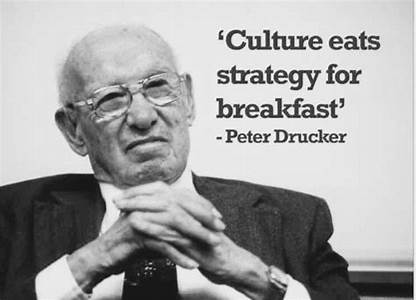
AI algorithms are data hungry and will need ever more access to data to compute outcomes, well beyond the human mind capacity to actually digest. Whilst self aware AI will be able to make their own decisions, organizations (and the people running them) are unlikely to allow the machines to achieve full ubiquity as Peter Drucker famously said;

This means that no matter how great your product, technology or strategy, its success will be held back if there is no willingness or cultural alignment. It’s the people executing the strategy that brings it to life.

Shared values unite culture to strategy. If your company’s unique selling point is innovation, a culture based on price efficiency would not work. Our vision, values and mission – culture – determines whether a strategy will succeed or fail.

Whether it will be AI identifying a face in a crowd for potential security threats, or predicting how a stock will perform, the output will required a trained human to ratify the recommendation outcome. We have created another format where consultative ‘cognitive’ solutions will developed to ensure that the market continues to ‘pay for advice’.

In the case of driverless cars, the progress in AI has been outstanding, however most governments will not allow a fully autonomous solution without a human seated behind the steering wheel. Safety concerns have not yet been fully overcome.

From a procurement perspective, the real impact of AI is far from clear. There are numerous approaches and options to execute vision. AI ‘s impact on the procurement transaction, rather then being self-determined, is more likely to result in the procurement professional overseeing and managing the output to ensure alignment. Feeding into AI programming and system design requires a strong procurement, supply chain and business partnership understanding.

It will be interesting to see how AI develops in 2024. Happy New Year.

Generative AI: What’s the procurement buzz?

Is having your procurement platform based on generative AI a ‘silver bullet’ breakthrough? I was recently involved in a discussion which got me thinking about the implications for business operations. As procurement is often tasked to leverage new ideas into business benefits, what does all this all mean………..

  • Generative AI generates new ‘creative’ content – written articles, art, music; think ChatGPT, Dall-E2, AIVA . Content represents the ability to communicate ideas and depends on the context and purpose. In the procurement world, examples include How to Guided Buying, Helpdesk FAQ, and data visualization. Generative AI is trained using ‘unstructured’ data and learns from data patterns.
  • Predictive AI utilizes data to generate predictions to support decision making. These insights are used by supply chain, finance and procurement functions to improve forecasting, optimization, fraud detection etc. and helps us make sense of the ocean of historical data that exists within an organization. Predictive AI supports the relevant classification of datasets, data correlation and trending to turn data into strategy formulation. Predictive AI is normally associated with ‘structured’ data.

Procurement frustrations

According to a survey back in 2020, 82% of supply chain leaders experience frustrations with AI (Secondmind, AI System Survey).

The biggest frustrations around AI were caused by a lack of reliable data (37%) and “rigid processes and internal structures” which prevented quick responses to changing market conditions (41%). 

AI relies on a large quantity of good reliable data.

i) Poor Quality Data – we all know this challenge!

The report said 96% felt this affected their ability to make effective decisions, with 50% saying they had to spend significant time manually analysing and interpreting the data to help inform decisions, and 31% highlighting expensive forecasting and planning mistakes.

Bad data or out of date data will corrupt the insight – Garbage in, Garbage out.

ii) Organizational barriers – we all know this challenge!

It takes a village to respond to an event, and any organizational disconnect, lack of alignment and barrier to react promptly to data-driven insights will hinder an organizations ability to leverage AI output.

Conclusion

Generative AI is considered core to this growth of AI; the AI market was valued at $ 136 billion in 2022, and predicted to grow at a compound annual rate of 37.3% from 2023 to 2030 (CIPS, Supply Management July 2023). However it is clear that presently it is still humans with the relevant expertise and experience supervising the inputs and maintaining responsibility for interpreting the outputs. The understandable concern is the need to establish oversight to ensure standards for responsible AI practices.

Generative AI will not solve Poor Data or Organizational challenges; and our ‘call to action ‘is the need to address these pivotal factors to best leverage the benefit of AI advancements. Any breakthrough is dependent on getting our house in order!

Final Note: Generative AI and Predictive AI are complimentary and becoming more symbiotic. Generative AI generates content for processes and can be used to create synthetic data for Predictive AI. Generative AI is able to use predictive processes to generate the next unit of content.

Help set the path. Champion data quality and organizational agility

Lets discuss ‘Cognitive’

Recent press articles had my mother phone me expressing concern that Artificial Intelligence would take away our jobs! I seem to recall they said the same thing about computers that spawned a global industry now worth over $5 trillion dollars.

Being passionate about technology and procurement, I am awaiting for the technology providers to explain how those frustrating business processes that users struggle to follow will be transformed to relegate the front and back office obsolete.

Disruptive technology often benefits us in ways we had not initially considered. There is one key ingredient I believe AI requires to transform our lives, COGNITIVE.

Cognitive involves human perception; it addresses how we think, learn and remember. Each of us is wired differently: How we interact, the level of intuition we employ to make sense of the world and intellectually reason a fact to form knowledge makes us who we are.

Any fool can know, the point is to understand.

Albert Einstein

Cognitive science connects with the way you think and behave. Our ability to process information, solve problems, interpret speech and visual signals, for example reading someones body language, helps us to form decisions. This will be core to how AI will create value. If we cannot interact or make sense of AI output, despite limitless intelligence and the endless possibly of insights, we will struggle to leverage its full potential. It’s akin to the cleverest human with poor interpersonal skills facing cultural barriers in a world dominated by us ordinary mainstream folks.

Cognitive AI enables a machine to infer, reason, and learn in a way that emulates the way humans do things. Cognitive AI does this by processing both structured and unstructured data, and experiencing interactions between humans and between machines. It is worth distinguishing between RPA (Robot Process Automation) which automates repetitive tasks using structured data. RPA has already made significant productivity and efficiency gains for many organizations.

Combine Cognitive AI with RPA and we then have cognitive bots able to reason and make decisions. The challenge is who is teaching the bot the right answer and defining the data structure; its us humans again. Outside the concern of AI bias, more to the point there is often no single right answer in life. After all what is right for you, may not be right for me. Our individual complexity can create frustration for others.

Cognitive bots analyze processes, recognize inefficiencies and create recommendations to increase productivity and quality. Humans remain the ultimate decision makers. Our role transforms to address how we configure and manage cognitive bots. Our individual workload just got more impactful!

It’s by learning new things in life that makes us grow. For me it’s a thumbs up opportunity.