All posts by Aysco Consulting

Founder of AYSCO Consulting FZCO

Lets discuss ‘Cognitive’

Recent press articles had my mother phone me expressing concern that Artificial Intelligence would take away our jobs! I seem to recall they said the same thing about computers that spawned a global industry now worth over $5 trillion dollars.

Being passionate about technology and procurement, I am awaiting for the technology providers to explain how those frustrating business processes that users struggle to follow will be transformed to relegate the front and back office obsolete.

Disruptive technology often benefits us in ways we had not initially considered. There is one key ingredient I believe AI requires to transform our lives, COGNITIVE.

Cognitive involves human perception; it addresses how we think, learn and remember. Each of us is wired differently: How we interact, the level of intuition we employ to make sense of the world and intellectually reason a fact to form knowledge makes us who we are.

Any fool can know, the point is to understand.

Albert Einstein

Cognitive science connects with the way you think and behave. Our ability to process information, solve problems, interpret speech and visual signals, for example reading someones body language, helps us to form decisions. This will be core to how AI will create value. If we cannot interact or make sense of AI output, despite limitless intelligence and the endless possibly of insights, we will struggle to leverage its full potential. It’s akin to the cleverest human with poor interpersonal skills facing cultural barriers in a world dominated by us ordinary mainstream folks.

Cognitive AI enables a machine to infer, reason, and learn in a way that emulates the way humans do things. Cognitive AI does this by processing both structured and unstructured data, and experiencing interactions between humans and between machines. It is worth distinguishing between RPA (Robot Process Automation) which automates repetitive tasks using structured data. RPA has already made significant productivity and efficiency gains for many organizations.

Combine Cognitive AI with RPA and we then have cognitive bots able to reason and make decisions. The challenge is who is teaching the bot the right answer and defining the data structure; its us humans again. Outside the concern of AI bias, more to the point there is often no single right answer in life. After all what is right for you, may not be right for me. Our individual complexity can create frustration for others.

Cognitive bots analyze processes, recognize inefficiencies and create recommendations to increase productivity and quality. Humans remain the ultimate decision makers. Our role transforms to address how we configure and manage cognitive bots. Our individual workload just got more impactful!

It’s by learning new things in life that makes us grow. For me it’s a thumbs up opportunity.

Bold

ADJECTIVE

  1. (of a person, action, or idea) showing a willingness to take risks; confident and courageous.

Do we consider Procurement bold or risk averse? In risk averse organizations, the desire to avoid failure overrides the desire to achieve good outcomes (Lopes, 1987). An old debate suggested that Procurement’s risk aversion is limiting it’s ability to deliver value in the public sector (Public Spend Forum Exchange 2017). This risk aversion impacts the ability to find a better way and generate commercial innovation. Too often cultural mindset barriers are formed which are then legitimized through rigid procedures and regulations which in turn leads to further mediocrity. We all get tired of banging our head off the same wall……

Is Procurement bold enough to challenge those established norms and shift the mindset? Or do we sit back and bend to the immovable object that sees creativity as a risk that breaks the rules.

Boldness requires a wealth of relevant experience , and a level of confidence that comes from knowing your stuff! The question is how we change mindsets as today’s organizations face more and more regulation. The original study conclusion remains the same: the core issue concerns organizational knowledge, education and training.

For those seasoned Procurement practitioners, are we condoning risk aversion or helping facilitate a mindset change?

<Join the debate>

Do you feel the urge (to innovate)?

The call to innovate has never been stronger given the current market challenges. The dilemma faced by many organizations is that reality is never simple and often there is a significant mindset block in tackling how innovation requires a change in Operating Model.

The fear of failure, loss of influence or power, lack of control and inability to trust in a guaranteed outcome block changes. How do organizations navigate this?

To truly leverage innovation, you need a plan:

“If you fail to plan, you are planning to fail

Benjamin Franklin

Information + No Insight = No Strategy

No strategy? Leaders need to step up to the call to action and develop a plan to utilize innovation. This plan must address people, process and technology. Hoping technology adoption will happen just through training is over simplistic – what does it mean for the user experience? The innovation needs to deliver a well thought out advantage and resolve the WIIFME (What’s In It For Me) ‘balancing act’ across the end-to-end process. Innovation for innovation sake is not a plan. The strategy needs to be clear, insightful and deliver value.

Investment, leadership sponsorship, ‘A’ team formation are of course the usual prerequisites.

Still keen to to innovate? Establish a super user audience to ensure your strategy is smart. Even the best innovation can result in a ‘hot mess’ which will be considered as a ‘great idea, just badly executed’ if there is no clear understanding of the outcome benefits and process to capture value.

Know your audience! Transform the mindset.

This is Cognitive.

Procurement Pioneers

Are you a Procurement person in the business, or a business person in Procurement?

For a few organizations, procurement is considered a ‘blocker’ preventing growth and success, and regarded as disconnected from business goals.

Procurement have a level of risk management responsibility, but this should not be applied with total disregard of the needs of the business. Our ability to build a collaborative relationship with the business requires procurement to act as business managers. We are all on the same team and have a common goal to ensure the business succeeds.

Procurement transformation is more than finding the right technology platform, it is changing the mindset and establishing a service centric approach with an attitude to succeed. Too often technology is applied to support a risk adverse, user unfriendly procurement transaction experience. This is a fundamental failure of procurement to understand its true value proposition and leverage the technology in the right way.

This does not mean we should be meek and afraid to challenge the business; our agenda should be to challenge and transform, thereby unlocking 10 x business contribution. Transform requires Procurement to understand the business challenges and pioneer a new approach. Set the vision. Technology enables humans. Become the business enabler! Lead change.

We are Bold, Optimistic, Human-Centric, Pioneering, Responsible.

We are Dreamers Who Do.


Our life is shaped by our relationships, and having recently started a new adventure, I want to thank all those that have enabled me and supported my latest journey.

Power Team Squared

Last week I met up with a couple of my ex-colleagues and was reminded how the power of team was truly awesome.

“Great things in business are never done by one person; they’re done by a team of people”

Steve Jobs

The ability to create and form high performing teams is an indication of great leadership, and whilst we all recognize individual performance and contribution, prioritizing individual performance limits success as a whole.

The opportunity to become a valued team player is personally fulfilling, however organizations have difficulty in quantifying business synergy (the total is more than sum of the parts) success. Giving this measure challenge, individuals tend to be geared towards independent goals. A common organizational pitfall is the way individuals are allocated objectives. Team or project initiatives are set the same functional ‘silo’ business as usual measures – none reflecting the value add of the ‘improvement’ that will materialize across the business as a whole. For example, imagine if a procurement goal was to reduce the volume of accounts payable invoicing issues.

Good leaders understand the need to think holistically, break down the barriers and use the bigger picture to inspire and motivate. Individuals can become frustrated if there is a lack of vision and strategic direction with respect to an overall business outcome – we all need to glimpse the ‘light at the end of the tunnel’ and have our role explained as part of that success journey.

Technology enablement requires cross functional collaboration and it goes without saying that one of the most important ‘success’ ingredients is to align the best talent and have them operate as ‘one team‘. Internal communication and dysfunction remain the biggest hurdle in organizational transformation, and leaders must ‘commit’ to ensure that these initiatives are resourced appropriately, supported wholly, and visibly recognized as being critical to the overall vision.

This is more than sending individuals on team building development courses. To address the challenge in bringing back those lessons into the workplace, great leaders set the agenda to frame team success.

What’s your next BHAG (Big Hairy Audacious Goal)?

Digitized Contract Management

Automating the contract management process has long been part of an organization’s digital aspiration, however there seems to be a lack of clarity on what this really entails and delivers.

Go Digital caption image white on blue

Depending on who you talk to, you will get different views. The dilemma originates in the unconnected goals of the individuals utilizing the solution. Unfortunately there can be conflicting priorities that will influence the path that organizations take, and together with a lack a vision across the end-to-end contract management process, organizations miss significant service, cost, and risk improvement opportunities.

Typical Digital Journey Steps (1-2-3)

Step 1

Contract signing – use of digital signatures. This initial step will speed up the signing process and there are a number of electronic document signature platform solutions on the market. These solutions can handle both paper and electronic formats to support a transition from an existing manual to digital process which is useful when you are beginning your digital journey.

Importantly there needs to be clear policy guidance on what documents can be signed digitally. The more rule exceptions or exemptions to using digital signatures, the harder the organization will find it will be to achieve a 100% user adoption.

Step 2

Great, you have now have individuals invested in a paperless approval process however did you think about how this document signing process was fed in the first place.

Step 2 avoids the manual scan, upload, tagging and administrative pain that is created if the digital signature solution is not integrated directly with the contract management system. This means the contract management system becomes core to your digital approach.

TIP: Ensure that your digital signature and contract management solutions ‘talk to each other’ out of the box.

Again, there are numerous digital platforms out in the market – some with very rich features, however adoption success remains challenging. This is where the organizations needs to understand ‘what’ standard form drives customer and supplier contract generation.

TIP: Ensure your standard form documents cover 80%++ of your scenarios and relevantly reflect the products and services you are selling/ acquiring.

Respective end-customer and supplier contract creation and generation is essentially the same process, but complexities may differ due to different market positioning. For example, you may have to use the ‘other parties paper’ as the start point where that client or supplier organization has a greater balance of power rather than using your own standard terms & conditions. Assessing respective document volumes, complexity and $ value is key to unlocking an appropriate contract management process.

TIP: Establish a centralized ‘secure’ contract document repository with relevant templates, appropriate user support and role access

Keyboard T&C blue button

Authoring functionality may look cool, but it does not always make sense if you have standard preset terms & conditions, non-disclosure agreements, and/or other master documents. If we do need amend terms, we need to consider the negotiation process – how do we negotiate and conclude red-lines with the other party?

For many medium to large organizations, roles and responsibilities are segmented – Legal look after legal aspects, Procurement / Sales look after the commercial aspects etc. This means that contract management system needs to support the way the business operates its process flow i.e. the practice of ‘how’ the organization generates and concludes a document ready for signature?

TIP: Ensure your contract management system has the ability to be support internal and third party collaboration within the respective ecosystem partitions.

For example, do you need to establish a Purchase Order before signing the contract or the other way around? How is the contract document linked to the organization’s order management process. Is there 100% contract compliance across the organization?

Institute of Supply Management (2017) research suggests only 60%-80% of the organizations business transactions are governed by some sort of written agreement.

At the heart of contract digitalization are business policies. For example, ‘who’ within the organization is authorized to sign, ‘who’ has the final say on value versus risk, ‘what’ delegation of authority levels exist, ‘who’ has ownership of audit and compliance responsibilities etc. This must be understood to design and optimize the contract management process.

TIP: Who owns the contract, execution and management and is ‘on-point’ when the contract needs be leveraged. This is the value that must be qualified and quantified to support the determination of the ‘right’ process flow solution

Step 3

So we have dealt with the complexities and process ‘what’, ‘how’ and ‘who’ but has the organization connected the reasons for the contract ‘why’. Organizations need to consider the balance between value and risk. For example, organizations acting with zero risk appetite can make your business unattractive or closed for new partners/suppliers with onerous liabilities, insurance and or other terms. An unwieldy and lengthy contract management process benefits no one.

IACMM research suggest that 70% -75% of commercial issues lie at the heart of most troubled contracts (CPA Global 2016, “Excellence in Contract Management”)

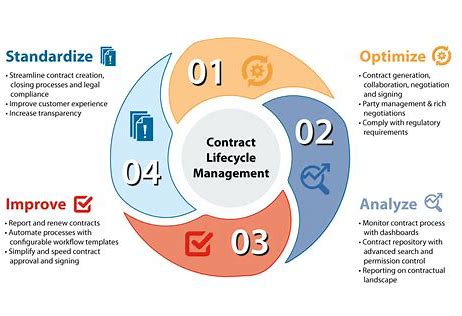
Contract Lifecycle Management (CLM) steps beyond the contract management generation and signature process and deals with the delicate balance between:

i) Partner /Supplier performance, and

ii) Risk mitigation

Man balancing on tightrope

In the ‘digitalized’ world, we need to capture those performance attributes and risk factors in the ‘meta data’ to monitor and manage the contract. The challenge is that CLM requires cross-functional data inputs that originate from other platforms. This means that CLM is much more than a digitized agreement; it needs to be integrated more holistically to ensure that the end-to end dataset supports an operational process. The goal is to operationalize contracts to aid and drive value across the organization.

Good contract development and management can increase company profitability by 9% (World Commence & Contracting 2022, ‘ Poor contract management cost companies 9% – Bottom Line’)

To maximize impact, CLM must transition from a legal tool into an operational tool that allows organizations to optimize cost, quality and time. Establishing appropriate performance measures and smart reporting is critical to monitor and manage the value and risk balance.

“Instead of providing boxes to check to demonstrate compliance, output from frameworks should be a roadmap for improving business performance. It’s a way for companies to examine their current processes and pinpoint where they are going wrong via comparison to global best practices”

Ronald Lear, CMMI Institute Director of IP Development

TIP: Visual dashboards, such as the use of heat maps, are great at highlighting specific ‘focus opportunities’.

Ultimately contract breaches and remedy execution end up becoming legal issues, however good contract management intersects with good customer/supplier relationship management. Mitigation and prevention are preferable to cure. The true value of digitization is the power to manage a relationship actively rather relying on a passive document hiding in someone’s bottom draw.

TIP: Apply continual due diligence. Not only agree and check risk factors before you enter any agreement, but conduct regular ongoing reviews during the agreement term. A 360 view of the customer/ supplier relationship can be enhanced with specialist third party data covering where required: reputation, credit / finance , legal, security, environment, social and governance, supply chain inputs etc.

Conclusion (3-2-1 reversal)

If you know the journey potential, then arguably the contract management digitization process should not be owned by the legal function. The business needs to lead this based on a broader set of value and risk measures.

With and without digitalization, contract operationalization is extremely challenging – the organization can become ‘bogged down’ with data entry and information overload. This requires a robust vision on how to set-up an optimized process to connect individual goals.

Already have a digitized contract management roadmap. Whose goals have been prioritized? Contact Us.


Cook, Eat and Repeat

This week’s inspiration is taken from Nigella Lawson’s BBC ‘cook, eat and repeat’ recipes, and having now survived the doldrums of the first month, attention is now truly focused on the opportunities ahead.

With the new year comes new resolutions, new budget and a sense of positive energy, digital tech firms are searching for better ways to inspire procurement professionals can leverage technology and avoid failure. One way to remove the fear is to ensure that someone else has tried it before, and discovered what works and what does not.

Unfortunately what makes sense and tastes terrific differs per individual. This distortion means that there is a reluctance to document the recipe. Why? Cook books have a range of recipes, not all may appeal, but they are here to help. Try one, if that does not succeed, try another, Once you have discovered a recipe that works, share the recipe with others. Success is repetitive.

Where to Start

Where do you find that elusive cook book? Find an experienced cook who has developed their own independent cook book, or at least able to access a library; that is well-versed across range of recipes, and capable of assessing what is likely to be attuned to the organization’s taste. Find and establish the recipe that works – it needs a mix and balance to perfect the outcome.

In simple terms, technology implementations follow the same ‘cook, eat and repeat‘ philosophy. Importantly……

Follow the instructions

  1. Use the prescribed ingredients (apple pie without the apple is not apple pie)
  2. Utilize the best ingredients you can afford (leadership, talent, team)
  3. Understand the cooking time (if someone wants a well-done steak but cooks it for 30 seconds, it will not be well-done)
  4. Assess success by arranging tasting sessions (“feedback is the breakfast for champions”)
  5. Sell the fact that you have found a tasty recipe. Others will be keen to have a try!

You might find this cooking analogy too simplistic, however given the successful introduction and adoption of digital technology remains a major challenge, what will you do to explain the process?

Ready, Steady, Cook! The best time to find your success recipe is to start now. Contact Us.

Digital [Invention] Drivers

‘Necessity is the mother of invention’. Practicality is a driver of necessity. The earliest concept of the modern day monetary system, metal coins, can be traced back to 600 BC, the Lydian Empire. Coins reigned supreme until the 11th century when the Song dynasty invented paper money ….. paper revolutionized the way that people could carry around their wealth without weighing them down! Ease and convenience are powerful USP’s (unique selling points).

Digitization, 1 and 0’s, paperless money is now starting to dominate our daily lives. The proportion of cashless transactions increases every year with over 70% of Asian and European payment transactions now going paperless. Whilst there may be cultural acceptance differences across the countries, the ease and convenience of ‘tapping’ your card or phone is now a digital cultural norm.

Foundational to the digitization enablement is the change in underlying process and platforms needed to support each ‘revolution‘ step. This is complex and often requires a mindset change. Under the digital transformation ‘call to action’, we refer to this as ‘digitalization’, or the ‘digitalization journey’. Digitalization involves the adaption and re-engineering of processes to balance user outcome benefits with business policies and procedures to ensure secure, consistent and robust controls. User adoption is improved by making the process easy and convenient.

What is the next tech wave?

The news is awash with the recent Microsoft investment in ChatGPT. Personally I believe we are still in that hype phase; and have yet to fully realize the benefit potential of using a ‘super charged’ chatbot to make the process easier and more convenient for the user. I articulate the challenges of AI in my last article, “The Age of AI: What’s Procurement’s fate?“.

As we close out 2022 and fast-forward 2023, my ongoing outlook is that we remain constrained by the complexity of the process being addressed and whether the user themselves are able to accept a new operational/ cultural narrative. The art of ‘digitalization’ remains, as ever, critical to success.

Confused by the digital tech talk. Share you perspective.

New Year Resolution

This is the Chinese year of the rabbit. There are number of business technology trends being predicted to help kick off 2023. Thank you to those that are sharing – there are so many exciting potentials for these solutions to add value, however I am reminded of the race between the rabbit and tortoise.

This cautionary tale reminds us that ‘slow and steady’ wins the race. There is a temptation for organizations to prioritize time, solution deployment, ahead of all other factors. The pressure to deliver ‘something ‘, ‘anything’ to meet management expectations is not only counter productive; it can result in teams burning energy needlessly. The drop out with team members chasing dead ends, loses momentum and motivation, and results in team churn and failed deliverables. This is equivalent to the rabbit tiring and needing to take a nap!

Steadiness and consistency will let you win like the tortoise did.

What’s your new year resolution?

Procurement’s Innovation Dilemma

>>Evolution of Lap Time<<

F1 cars have become dramatically faster over time, and estimated to be 2x as fast as the original cars.

In recent times, speed improvements have slowed given the rise of ‘competition’ game changers such as safety, fuel economy and stakeholder interests. The goal posts are always moving; the F1 purpose evolved – its values changed.

Purpose of the Past

Sounds familiar? Your organization wants to improve the performance of procurement and ‘raise the bar’, however:

  • Procurement performance is ‘hard wired’ to cost savings –  price becomes an easy measure; cost is much harder to quantify and evidence; and non-cost factors valuation is over simplified to pass or fail
  • Procurement investment targets the sourcing and bidding processes – there are clear tangible wins especially where there is a ‘low bar’
  • Innovation investment is riskier, continues to ‘raise the bar’, but often targets value beyond cost savings
  • Procurement becomes stuck to its traditional ‘hard wire’ output (it is less risky and sits within their existing comfort zone). Particularly where an organization fails to change recognition and rewards; these form passive barriers to change. The ‘bar’ becomes fixed.

A breakthrough is required to avoid the law of diminishing returns.

>>New Purpose required<<

Where you innovate, How you innovate, and What you innovate are Design Problems

– Tim Brown

Using the F1 analogy, there will be a point where organizations need to evolve their purpose; either driven by the customer, regulation or market disruption. It becomes clear when continuing to ‘raise the bar’ that the same organization will need to realign their value and performance measures. This is a common ‘ high bar’ challenge. Of course speed remains core to F1, as costs will be for Procurement >>

Implications for Procurement

  • Procurement no longer have cost savings goals as their only objective
  • New value measures need to be established to reflect an enhanced and changed purpose – this requires a different procurement mindset
  • Innovation programmes enable new purposes. This requires investment, planning,  talent and leadership. Set a ‘why you innovate’ robust vision at the start!
  • Transformation is a business journey involving extensive internal and external change management.  Transformation takes time (typically measured in quarters and years). Tackle roadblocks quickly and stay consistent to the vision.

The game just became more complex. Is your organization changing Procurement’s Purpose?