Automating the contract management process has long been part of an organization’s digital aspiration, however there seems to be a lack of clarity on what this really entails and delivers.
Depending on who you talk to, you will get different views. The dilemma originates in the unconnected goals of the individuals utilizing the solution. Unfortunately there can be conflicting priorities that will influence the path that organizations take, and together with a lack a vision across the end-to-end contract management process, organizations miss significant service, cost, and risk improvement opportunities.
Typical Digital Journey Steps (1-2-3)
Step 1
Contract signing – use of digital signatures. This initial step will speed up the signing process and there are a number of electronic document signature platform solutions on the market. These solutions can handle both paper and electronic formats to support a transition from an existing manual to digital process which is useful when you are beginning your digital journey.
Importantly there needs to be clear policy guidance on what documents can be signed digitally. The more rule exceptions or exemptions to using digital signatures, the harder the organization will find it will be to achieve a 100% user adoption.
Step 2
Great, you have now have individuals invested in a paperless approval process however did you think about how this document signing process was fed in the first place.
Step 2 avoids the manual scan, upload, tagging and administrative pain that is created if the digital signature solution is not integrated directly with the contract management system. This means the contract management system becomes core to your digital approach.
TIP: Ensure that your digital signature and contract management solutions ‘talk to each other’ out of the box.
Again, there are numerous digital platforms out in the market – some with very rich features, however adoption success remains challenging. This is where the organizations needs to understand ‘what’ standard form drives customer and supplier contract generation.
TIP: Ensure your standard form documents cover 80%++ of your scenarios and relevantly reflect the products and services you are selling/ acquiring.
Respective end-customer and supplier contract creation and generation is essentially the same process, but complexities may differ due to different market positioning. For example, you may have to use the ‘other parties paper’ as the start point where that client or supplier organization has a greater balance of power rather than using your own standard terms & conditions. Assessing respective document volumes, complexity and $ value is key to unlocking an appropriate contract management process.
TIP: Establish a centralized ‘secure’ contract document repository with relevant templates, appropriate user support and role access
Authoring functionality may look cool, but it does not always make sense if you have standard preset terms & conditions, non-disclosure agreements, and/or other master documents. If we do need amend terms, we need to consider the negotiation process – how do we negotiate and conclude red-lines with the other party?
For many medium to large organizations, roles and responsibilities are segmented – Legal look after legal aspects, Procurement / Sales look after the commercial aspects etc. This means that contract management system needs to support the way the business operates its process flow i.e. the practice of ‘how’ the organization generates and concludes a document ready for signature?
TIP: Ensure your contract management system has the ability to be support internal and third party collaboration within the respective ecosystem partitions.
For example, do you need to establish a Purchase Order before signing the contract or the other way around? How is the contract document linked to the organization’s order management process. Is there 100% contract compliance across the organization?
Institute of Supply Management (2017) research suggests only 60%-80% of the organizations business transactions are governed by some sort of written agreement.
At the heart of contract digitalization are business policies. For example, ‘who’ within the organization is authorized to sign, ‘who’ has the final say on value versus risk, ‘what’ delegation of authority levels exist, ‘who’ has ownership of audit and compliance responsibilities etc. This must be understood to design and optimize the contract management process.
TIP: Who owns the contract, execution and management and is ‘on-point’ when the contract needs be leveraged. This is the value that must be qualified and quantified to support the determination of the ‘right’ process flow solution
Step 3
So we have dealt with the complexities and process ‘what’, ‘how’ and ‘who’ but has the organization connected the reasons for the contract ‘why’. Organizations need to consider the balance between value and risk. For example, organizations acting with zero risk appetite can make your business unattractive or closed for new partners/suppliers with onerous liabilities, insurance and or other terms. An unwieldy and lengthy contract management process benefits no one.
IACMM research suggest that 70% -75% of commercial issues lie at the heart of most troubled contracts (CPA Global 2016, “Excellence in Contract Management”)
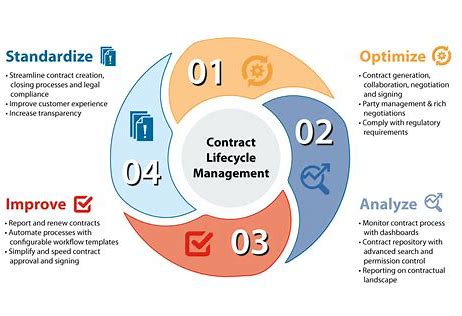
Contract Lifecycle Management (CLM) steps beyond the contract management generation and signature process and deals with the delicate balance between:
i) Partner /Supplier performance, and
ii) Risk mitigation
In the ‘digitalized’ world, we need to capture those performance attributes and risk factors in the ‘meta data’ to monitor and manage the contract. The challenge is that CLM requires cross-functional data inputs that originate from other platforms. This means that CLM is much more than a digitized agreement; it needs to be integrated more holistically to ensure that the end-to end dataset supports an operational process. The goal is to operationalize contracts to aid and drive value across the organization.
Good contract development and management can increase company profitability by 9% (World Commence & Contracting 2022, ‘ Poor contract management cost companies 9% – Bottom Line’)
To maximize impact, CLM must transition from a legal tool into an operational tool that allows organizations to optimize cost, quality and time. Establishing appropriate performance measures and smart reporting is critical to monitor and manage the value and risk balance.
“Instead of providing boxes to check to demonstrate compliance, output from frameworks should be a roadmap for improving business performance. It’s a way for companies to examine their current processes and pinpoint where they are going wrong via comparison to global best practices”
Ronald Lear, CMMI Institute Director of IP Development
TIP: Visual dashboards, such as the use of heat maps, are great at highlighting specific ‘focus opportunities’.
Ultimately contract breaches and remedy execution end up becoming legal issues, however good contract management intersects with good customer/supplier relationship management. Mitigation and prevention are preferable to cure. The true value of digitization is the power to manage a relationship actively rather relying on a passive document hiding in someone’s bottom draw.
TIP: Apply continual due diligence. Not only agree and check risk factors before you enter any agreement, but conduct regular ongoing reviews during the agreement term. A 360 view of the customer/ supplier relationship can be enhanced with specialist third party data covering where required: reputation, credit / finance , legal, security, environment, social and governance, supply chain inputs etc.
Conclusion (3-2-1 reversal)
If you know the journey potential, then arguably the contract management digitization process should not be owned by the legal function. The business needs to lead this based on a broader set of value and risk measures.
With and without digitalization, contract operationalization is extremely challenging – the organization can become ‘bogged down’ with data entry and information overload. This requires a robust vision on how to set-up an optimized process to connect individual goals.
Already have a digitized contract management roadmap. Whose goals have been prioritized? Contact Us.






 AYSCO CONSULTING